

Docking is the part of boating that makes even confident captains tighten their grip on the wheel. You are close to hard surfaces, people are watching, the wind always seems to pick up at the worst moment, and a small mistake can leave dock rash on your gelcoat that you see for years.
From Marine Concepts’ vantage point, working with boaters across the United States, the pattern is clear. Most dock damage comes from the same handful of habits: approaching too fast, loose fenders, poorly placed lines, and underestimating wind or current. The good news is that every one of those habits can change with a simple, repeatable process and the right dock protection mindset.
Think of this guide as a calm voice on the dock, walking you through each step so you can protect your boat, keep your crew safer, and feel a lot less stressed when the dock comes into view.
If you only remember a few things from this Docking 101 guide, make it these:
Dock rash is the scuffing, scratching, or dull abrasion that shows up on your hull after contact with pilings, dock edges, or other boats. It often looks minor at first, a hazy patch or streak in the gelcoat, then gradually turns into a visible reminder of one rough docking.
Effective dock protection starts before you feel the bump. The goal is simple: manage the boat’s momentum, control where contact happens, and cushion every likely impact point. That means:
Once you think in terms of energy and contact points, every move you make at the helm has a purpose.
A smooth docking always starts thirty seconds earlier than most people think. Before you enter the fairway or pull into the slip, take a breath and quickly scan:
Now build a simple mental plan. For example: “Approach with the port side to the dock, account for a light crosswind from starboard, ease in at idle, then use a short reverse burst to stop and secure the forward cleat first.”
That tiny pause keeps you from reacting in a rush. It also lets you brief your crew so everyone knows who is handling which line, instead of grabbing at rails or fenders at the last second.
Speed and angle decide how much force reaches the dock. For most recreational boats, the safe rule is: approach at idle or just above, at a shallow angle of about 20–30 degrees off the dock.
Key points:
If you feel too fast or out of line, back out and reset. The few extra seconds spent on a reset are far less painful than months looking at gouged gelcoat.
Fenders and lines exist to prevent dock rash. They only work if they are set before contact and placed where the hull meets the dock.
You will notice that the more your fenders and lines do, the less your arms and knees have to push.
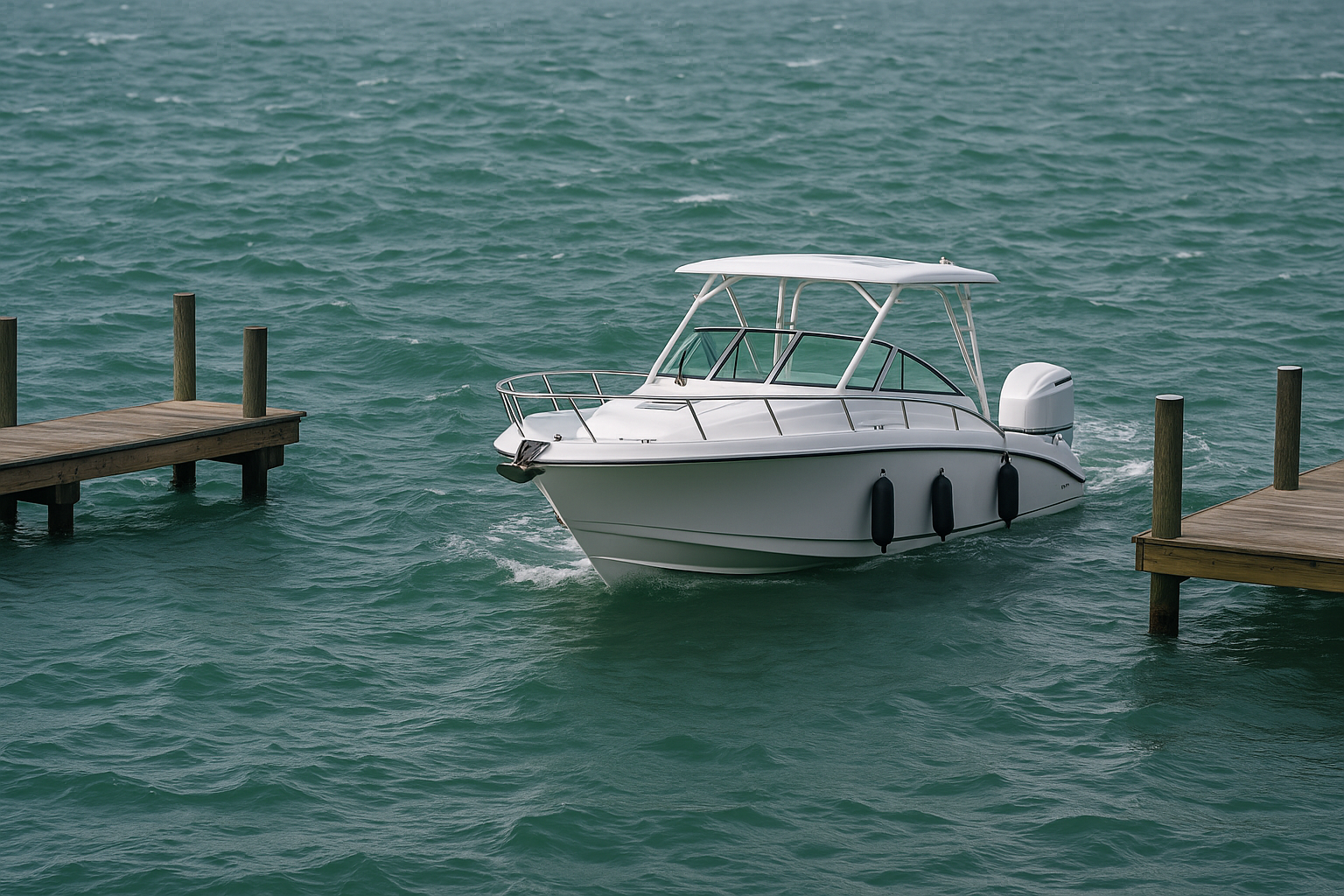
Calm, still water is the easy scenario. Real life gives you crosswinds, boat wakes, and narrow slips. The principles stay the same; you just exaggerate them slightly.
Docking is part technique and part feel. You will get that feel faster if you practice on quieter days instead of only improvising when the marina is packed.
Successful one-person docking comes down to preparation and sequence. Use this simple pattern:
Because you have already built in dock protection with fenders and a spring line, you are not racing around chasing the stern while the bow drifts.
Even experienced captains touch pilings or misjudge a gust. The important thing is how you respond in the moment and afterward.
In the moment:
Afterward:
Dock rash feels frustrating, yet it is also helpful feedback. Ask yourself what led to that moment: speed, angle, missing fender, or misread wind. Adjust the process, and the next approach usually goes better.
Docking is only half the equation. Long-term UV, rain, and debris can do more damage to your finish than a single bump.
A few habits extend the life of your gelcoat and hardware:
Serious boaters eventually realize that the best dock protection plan includes what happens when the boat is not in use at all.

Marine Concepts was founded by lifelong boaters who saw, day after day, what happens when boats sit exposed at the dock. Sun, rain, falling debris, and spider droppings attack the finish, even if you dock perfectly every time.
That is why Marine Concepts developed a patented boat cover track system paired with custom boat covers made from Aqualon Edge marine-grade fabric. The system glides on and off like a curtain, so one person can cover or uncover even a large boat in about a minute, without dealing with snaps or crawling across the deck. The cover is custom fit, hand-sewn in the USA, and tailored for your exact boat and dock setup.
From a dock rash perspective, this matters more than it first appears:
If you want the best way to keep your boat from dock rash over the long term, pair solid docking technique with a serious dock protection solution like a Marine Concepts custom boat cover track system.
Q. What causes most dock rash on boats?
A. Most dock rash comes from slow grinding contact, not dramatic hits. Small misalignments, loose fenders, lines that allow the boat to surge, and wind pushing the hull against a piling all add up over time.
Q. How can I quickly improve my docking technique?
A. Plan your approach before you enter the slip, go slower than what feels natural, and set fenders and lines ahead of time. Those three changes alone dramatically reduce contact and help prevent dock damage on routine arrivals.
Q. What is the best way to keep your boat from dock rash at a busy marina?
A. Use correctly sized fenders at the beam and stern, rig a spring line, and keep your speed at idle. In crowded marinas, expect unpredictable wind gusts and wakes, so give yourself extra room to reset if you do not like your angle.
Q. Can a boat cover really help with dock rash?
A. A quality custom boat cover does more than keep the interior clean. When paired with a patented boat cover track system that you can operate on your own, it protects the hull sides from debris, UV, and incidental bumps, all of which reduce the severity and visibility of dock rash over time.
Q. How often should I inspect for dock rash and minor damage?
A. Make a quick walk around part of your normal docking routine. Once the boat is secure, scan both sides for fresh scuffs, marks on the gelcoat, and line chafe so you can address any issues before they grow.
Docking will always demand respect. You are moving heavy equipment close to hard surfaces in less-than-predictable conditions. Still, it does not have to feel like a stressful test every trip. With a clear docking plan, careful fender and line setup, and a realistic understanding of wind and current, you can approach any dock with calm, deliberate control.

