

Buying your first boat is equal parts excitement and responsibility. One day, you’re picturing calm sunsets and weekend rafting up. Next, you’re staring at a switch panel thinking, “Wait… what does that one do again?” That’s normal. Your first year is where good habits form, small problems get caught early, and your boat’s condition gets “set” for the long haul.
Most first-year mistakes are simple, and that’s good news. Safety is mostly checklist work, not mystery work.
A solid safety equipment baseline includes:
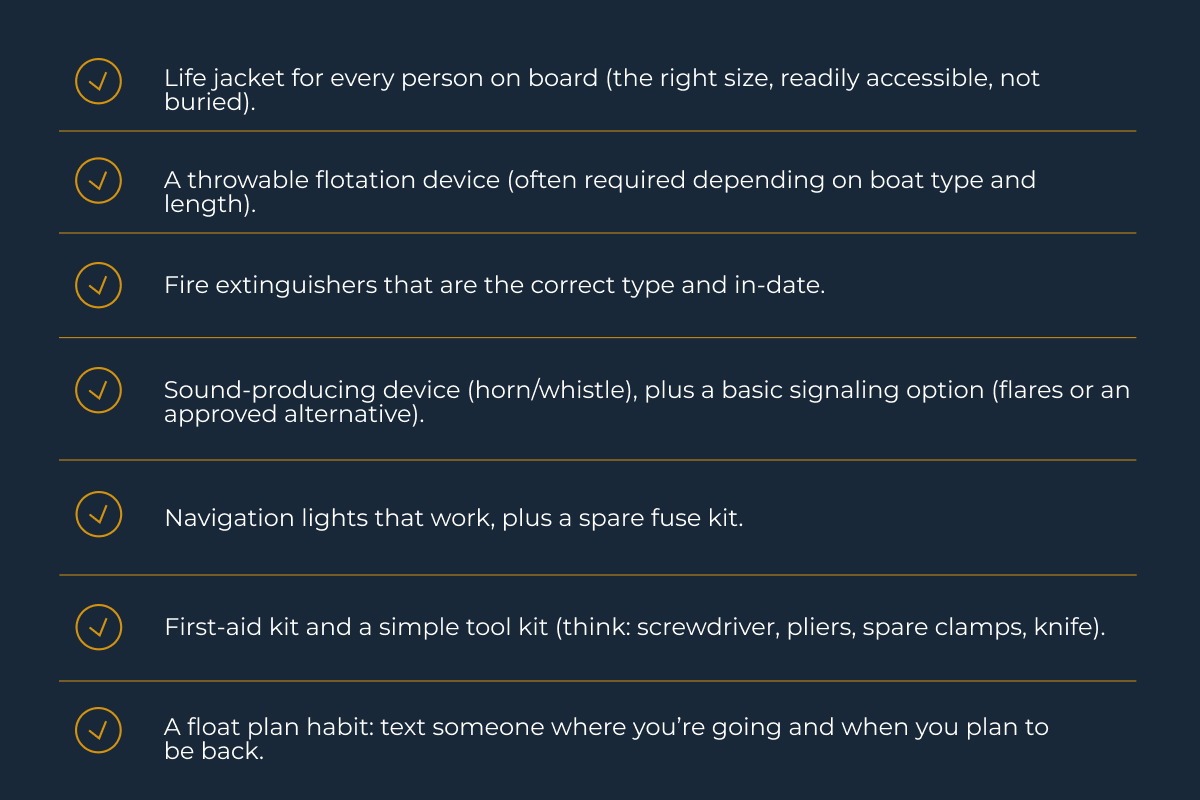
If you’re unsure what applies to your setup, check the U.S. Coast Guard requirements for your boat class and location. Do this once, then re-check at the start of each season.
A lot of first-time boat owner tips focus on “know everything.” That pressure backfires. Instead, learn in layers:
Layer 1 (first month):
Layer 2 (months 2–6):
Layer 3 (months 6–12):
And yes, you’ll have a day where something small goes wrong. That’s part of becoming confident.
Boat maintenance sounds like a big subject because it is. The trick is turning it into small rhythms.
After every outing (10–15 minutes):
Weekly or every few outings:
Monthly:
Consistency is what keeps problems small. It also makes ownership feel less like a project.
Here’s a quiet truth: sun and moisture do damage while you’re not even boating. UV breaks down upholstery and gelcoat. Humidity invites mildew. Salt air accelerates corrosion. Wind-driven rain finds its way into places you did not expect.
This is why boat storage and protection matter so much in year one. New owners often spend their first budget on gear and accessories. Meanwhile, the boat sits exposed between trips, collecting grime.
A practical protection plan looks like this:
A standard boat cover can look good on paper, but fail in real life if it’s cumbersome to install. Covers that require two people and over an hour to put on often end up unused, leaving your boat exposed to stains, weathering, and pests.
Marine Concepts’ custom boat cover track system solves this problem with a system that allows the cover to glide smoothly along an aluminum track, making it as easy as closing a curtain. One person can cover or uncover the boat in under a minute, ensuring your vessel is protected consistently.
Paired with a hand-sewn, custom-fit boat cover, this track system offers full protection against sun, rain, wind, and debris. The breathable fabric reduces moisture buildup, minimizing mold and mildew during long-term storage. By making premium protection practical, Marine Concepts ensures your investment stays safe while saving you time and effort.

Boat insurance is easy to postpone until it isn’t. Your first year is the time to get it right.
A simple checklist:
Pro Tip: Keep a small onboard folder or waterproof pouch with essentials. When someone asks for documentation, you’ll have it.
Even hands-on owners need reliable pros. You’ll eventually want a trusted:
This reduces stress. It also helps you avoid panic-buying the wrong parts at the wrong time.
Focus on safety gear, simple maintenance routines, and protection from sun and moisture. Do those three consistently, and everything gets easier.
At minimum: a properly sized life jacket for each person, a throwable flotation device, fire extinguishers, a sound signal, navigation lights, and a basic first-aid kit. Requirements vary by boat and region, so confirm with Coast Guard guidance.
After every outing: rinse and wipe down. Weekly: quick system checks. Monthly: deeper inspection and cleaning. The goal is consistency, not perfection.
Yes. Boat insurance helps with liability, storm damage scenarios, and unexpected incidents. Review the policy details so you understand what is covered and what is excluded.
A custom-fit cover reduces gaps where debris, moisture, and pests get in. The biggest benefit is that it supports a habit of covering consistently, which is what protects your investment.
Year one is not about becoming a marine expert overnight. It’s about avoiding the common pain points that make ownership feel harder than it should. Keep your safety equipment ready. Keep boat maintenance simple and repeatable. And protect your boat from the daily exposure that quietly ages it.
By taking these simple, consistent steps, you’ll enjoy a smoother, safer, and more rewarding first year on the water.

